



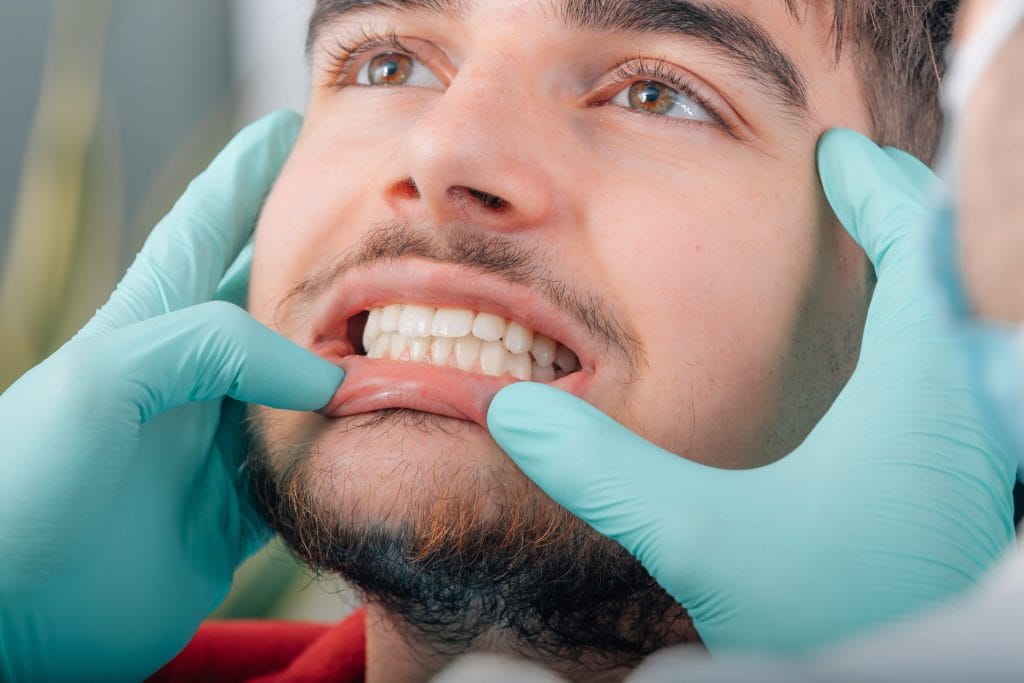
If you’ve ever been told you have a “watch area” or noticed faint white spots on a tooth surface, it can feel frustrating. You want to protect your smile but avoid unnecessary drilling. The good news is that modern preventive dentistry has expanded meaningfully. When early signs of decay are caught in time, your dentist may support the tooth’s natural healing pathway instead of moving straight to traditional fillings.
At Peter K. Cocolis, Jr. DMD and Associates in Springfield, VA, your care is built around clarity and comfort. You’ll see what we see with digital images and other advanced diagnostic measures, and you’ll have time to discuss your options. For many patients, that education-first approach makes newer minimally invasive options like Curodont feel approachable.
Tooth decay often starts quietly. Acids from bacteria pull minerals out of your tooth enamel, weakening the outer layer and creating areas that look chalky or dull. These white spot lesions often represent early tooth decay and can appear around the gumline, in grooves, or near brackets during orthodontic treatment.
At this stage, your tooth structure may still be mostly intact, which is crucial for long-term strength and function. When decay progresses to an advanced stage, the tooth may lose enough material that a restoration becomes necessary. Identifying an early cavity gives you a wider range of conservative options, including treatments that encourage the natural remineralization process.
Curodont is designed for early lesions where enamel has started to break down but hasn’t yet developed a large hole requiring traditional restorative treatments. It helps guide minerals back into porous areas.
The product is applied directly to the affected area after basic isolation, supporting the remineralization process by helping minerals move into weakened enamel. This type of enamel repair strengthens your natural tooth structure.
You may hear names like Curodont Repair, Curodont Repair Fluoride, or Curodont Repair Fluoride Plus. Some versions pair with fluoride strategies, such as fluoride varnish, to support mineral uptake and protection. Fluoride strengthens enamel and makes it more resistant to future acid attacks, supporting overall oral health.
Patients often ask whether this treatment will hurt. For early lesions, the goal is gentle care that respects your comfort and time. In many cases, the application of Curodont is quick and straightforward. Since it doesn’t involve drilling or placing artificial filling materials, the appointment can feel lighter for patients with dental anxiety.
Your experience matters as much as the material itself. Expect a clear explanation of why the area qualifies as early decay, realistic goals, and how your dentist plans to monitor it. That calm, step-by-step guidance helps make dental visits manageable.
Curodont is generally considered for early carious lesions limited to enamel or very shallow areas, rather than deeper cavities. The “right” choice depends on the range of lesions present and the depth of the lesion, which your dentist evaluates with an exam and imaging.
Curodont can be considered for patients of all ages, including adults with early demineralization and teens who develop white spots during orthodontic care. Your dentist’s role is to confirm the lesion is truly early and ensure there’s no hidden progression into deeper layers, such as the inner thirds of dentin, where treatment planning changes significantly.
You deserve a diagnosis that feels evidence-based, not rushed. Early lesions can be subtle, which is why modern tools matter. Practices may use a combination of clinical evaluation and technology, including laser fluorescence, to quantify changes in enamel.
Dentists rely on established evaluation methods and popular classification systems to describe and track lesions. In dental research, journals such as J Dent Educ and J Appl Oral Sci discuss detection, classification, and management of early caries. You don’t need to read an in vitro study to benefit from it, but you should feel confident that recommendations follow a well-studied approach to protecting teeth.
During your visit, the goal is to show you what’s happening in a way that makes sense. When you can see the problem clearly, you can make decisions calmly and confidently.
Curodont is valuable for early lesions but doesn’t replace every type of filling. Dental caries that have progressed, especially when cavitated areas allow food and bacteria to pack in, usually require more traditional dental treatments. In such cases, a dentist may recommend restoring the area and addressing contributing factors like dry mouth, diet, or brushing habits.
When decay is extensive, care may involve removal of the caries and placing a restoration designed to protect the tooth long-term. Your dentist will explain whether your tooth is in an early phase suited for remineralization support or whether it has reached a point where a restoration is the safer option.
Preserving enamel and avoiding unnecessary drilling helps maintain strength. Every time tooth structure is removed, future repairs can become larger over time. That’s why conservative options carry meaningful value when used appropriately.
A preventive plan often includes:
Some products, such as Repair Fluoride Plus, reflect a broader philosophy: support the tooth’s resilience and reduce the need for repairs later. You may also hear about Curodont Protect in preventive conversations. The name matters less than the goal—protecting vulnerable areas and supporting stability.
Comfort comes from knowing what happens next. While your exact visit depends on your needs, a typical appointment workflow for early decay management may look like this:
If multiple teeth have early areas, your dentist may discuss how many sites to treat and a timeline that respects your schedule. If you feel nervous in the chair, talk openly about it. Supportive options, including comfort-focused care, can make a difference.
Curodont works best as part of a complete plan. Your dentist will still look at the bigger picture: your home care routine, diet, saliva flow, and cavity history. That wider lens helps reduce the chances that a treated area returns or that new spots appear elsewhere.
If you’ve been told you have early lesions or suspect you do, you don’t have to guess. A thoughtful evaluation can clarify whether you’re dealing with simple demineralization, a true early lesion, or something deeper. That clarity supports confidence and keeps your treatment as conservative as possible.
If you have white spots, a suspected early cavity, or areas to monitor, we’re here to help you understand your options. At Peter K. Cocolis, Jr. DMD and Associates, you can expect clear visuals, unhurried explanations, and a plan designed around your comfort and long-term oral health.
Schedule an appointment today.